InstaGTO Review 2026: The Solver For Players Without 32GB RAM
InstaGTO review from a NL200-500 reg. How fast is it really, where it beats GTO Lab, where it falls short of PIO, and whether $29/month is fair.
InstaGTO Review 2026: The Solver For Players Without 32GB RAM
Let me describe the moment I bought my first InstaGTO subscription. It was a Saturday afternoon last summer. I was studying a turn check-raise spot from the previous night's session — BB defending against UTG with 87s on a board of T93r-8 — and I needed to know what GTO did with non-standard sizings on the turn that weren't in GTO Lab's pre-computed library.
I did not own PIOSolver. I had owned PIO years ago, but my current laptop has 16GB of RAM and that's not enough to run anything but the most trivial trees in PIO. I was looking at either spending $399 to upgrade PIO and accepting that solves would take 30+ minutes each, or finding a different approach.
InstaGTO was the different approach. Sign up, log in, define the tree in their web interface, hit solve, get a result in under 90 seconds. The result was correct. The price was $29/month. I've been a subscriber for 9 months as of writing this review.
I want to be careful with this review because InstaGTO is a tool that does one thing and the question of whether it's worth the money depends entirely on whether you need that one thing. For a lot of players, the answer is no — they need a study workspace, not a custom solving service, and they should buy GTO Lab or GTO Wizard instead. For a smaller subset of players, InstaGTO solves a real problem that nothing else solves at this price point.
I'm Alex, a 9-year online cash regular at NL200-500. I run InstaGTO alongside GTO Lab and PokerSnowie — they cover different needs. The links here are affiliate links and the opinions are mine. Let's get into the specifics.
What InstaGTO Actually Is (And What It Isn't)
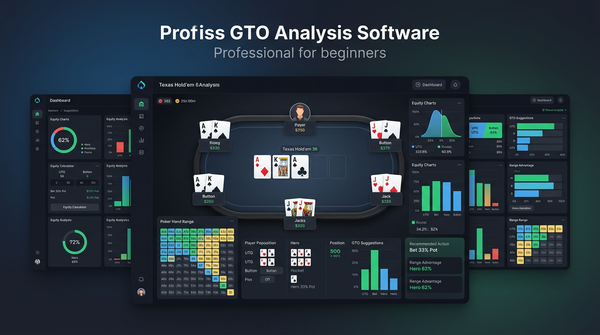
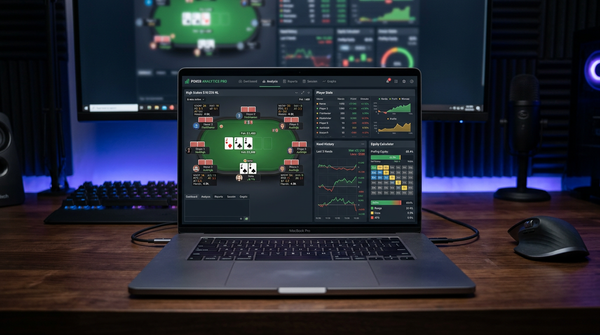
InstaGTO is a cloud-based postflop solver. You define a game tree (preflop ranges, bet sizings, stack depth, board) in their interface, submit the solve, and the cluster runs the computation and returns the strategy. Solve times for typical cash trees are 30-180 seconds depending on tree complexity.
What it isn't:
- It's not a pre-computed solution library like GTO Lab. There's no "browse the standard solutions" mode.
- It's not a teaching environment. There are no tutorials, no quizzes, no curriculum.
- It's not a hand history analyzer in the traditional sense. You can input hands but the analysis is per-spot, not per-session.
- It's not a true PIO replacement. The solver is real but the configuration depth is less than what PIO offers.
What it is:
- A fast cloud solver for arbitrary postflop situations
- A node-locking interface for exploring deviations
- A solution browser for the solves you've run, organized in a personal library
- A small set of preset templates for common situations
The user is meant to be a player who already understands solver workflows and wants to run custom solves on demand without owning expensive hardware. That's a narrower audience than GTO Lab's, but it's a real audience.
Pricing Reality
InstaGTO has kept a simple pricing structure that makes the value proposition clear:
| Plan | Monthly | Yearly | What's Included |
|---|---|---|---|
| Starter | $19 | $179 | 50 solves/mo, basic tree configuration |
| Standard | $29 | $290 | 250 solves/mo, full tree config, node-locking |
| Pro | $59 | $590 | Unlimited solves, larger trees, priority queue |
The Standard plan at $29/month is the one I'm on and the one I'd recommend most users pick. 250 solves per month is plenty for a serious study workflow — that's about 8 solves per day. I average about 3-4 solves per day in active study periods, so I'm well within the limit.
The Starter plan at 50 solves/month is too restrictive. You'd burn through that limit in a typical week of focused study. Skip it.
The Pro plan unlocks unlimited solves and larger trees (think deep stacks, multiple bet sizings per street, complex tree branches). For a coach or a player doing intensive research it might be worth it. For most players the Standard tier's solve quota and tree size limits are fine.
In CAD/AUD/NZD/GBP/EUR (USD billing applies):
- Standard: ~$395 CAD / $445 AUD / $485 NZD / £230 GBP / €270 EUR per year
That's competitive with PokerSnowie and meaningfully cheaper than GTO Lab's Standard or any GTO Wizard plan.
What InstaGTO Genuinely Does Well
Let me be specific about why I keep paying for it.
Speed Of Results Is The Headline Feature
The first time I solved a tree in InstaGTO and got a result in 90 seconds I couldn't believe it. PIO on a comparable spot on my current hardware would take 30+ minutes (my 16GB laptop can barely run typical trees). InstaGTO returns results fast enough that you can iterate — solve a spot, look at the result, change one parameter, re-solve, compare.
That iterability is a genuine workflow change. Instead of waiting for a solve and getting one shot at understanding the spot, you can explore variations. "What if Villain bets larger on the turn?" Re-solve. "What if I have a different range?" Re-solve. "What if both stacks are deeper?" Re-solve. Each one takes 1-3 minutes.
This compresses days of solver work into hours. For someone who studies seriously, that compression is worth real money.
Custom Tree Configuration
Unlike GTO Lab's pre-computed library, InstaGTO lets you define almost any tree you want. You set the preflop ranges (you can build them manually or pick from templates), the bet sizings on each street (multiple sizings allowed), the raise sizings, the stack depth, the rake structure, and a few other parameters.
This is the killer feature for players who encounter non-standard spots. If you play on a network where opens are typically 2.3x instead of 2.5x, you can solve with the actual sizing. If you frequently play in deep-stacked games, you can solve at the actual stack depth. If your villain favors unusual bet sizings, you can mirror that in the tree.
GTO Lab doesn't let you do this. It serves you the standard sizings from its library. For most spots that's fine, but for the spots where your reality differs from the standard, InstaGTO is the answer.
Node-Locking Works
The node-locking interface is solid. You can lock a node to a specific frequency or strategy and re-solve to see how the rest of the tree adjusts. This is the same kind of workflow you'd run in PIO for exploring exploitative play.
The implementation is competent rather than exceptional — GTO Lab's Population Deviator has a slicker interface for exploration, but for the kind of focused "what if Villain over-folds turn by 10%" question, InstaGTO handles it fine.
Personal Solve Library
Every solve you run is saved in your personal library. You can browse past solves, re-open them, edit and re-solve. The organization is basic (by date, with tags you can apply), but it works.
Over 9 months I've accumulated about 700 solves in my library. I reference past solves regularly when I encounter similar spots in play. Having them all queryable from one interface is genuinely useful.
The Solver Quality Itself Is Real
This is worth saying explicitly. The solver underneath InstaGTO is a real GTO solver, computationally similar to what PIO does. Convergence on standard trees is good (I've cross-checked maybe 30 spots against PIO outputs for a friend who runs PIO and the results match). The solutions are correct.
I mention this because there's been some confusion about whether cloud solvers like InstaGTO are "real GTO" or some kind of approximation. They're real. The math is the same. The hardware is just on someone else's machine.
Where InstaGTO Falls Short
I'll be specific about the failures.
Tree Complexity Caps Out
On the Standard plan, tree complexity is bounded. You can have multiple bet sizings per street but not too many. You can configure deep stacks but not extreme deep stacks. For most cash situations these limits don't matter. For unusual situations — say, 4-bet pots with three bet sizings on three streets at 250bb effective — you'll hit the limit and need to upgrade or simplify.
Limited Preflop Solving
InstaGTO is primarily a postflop solver. Preflop solving is supported but the interface and the solver capabilities are less developed. If you want to do serious preflop work — solving for ranges, building cold-call ranges from scratch, etc. — you'd be better served by a tool dedicated to it.
For my workflow this isn't a problem because I do preflop work in GTO Lab's pre-computed library. If you don't have a separate preflop solution source, InstaGTO alone doesn't give you everything you need.
No Population Deviation Library
Unlike GTO Lab, InstaGTO doesn't ship with a database of population tendencies you can node-lock against. If you want to deviate against population, you have to specify the deviation yourself based on your own knowledge of your player pool. This is doable but more work than GTO Lab's one-click population locking.
The UI Is Functional, Not Beautiful
InstaGTO's interface gets the job done but doesn't impress visually. The tree configuration form is dense, the result display is information-rich but cluttered, and the navigation between solves is workable but not elegant. It's clearly a tool built by engineers who valued speed and correctness over polish.
I don't actually care about this — I'd rather have fast solves with a plain UI than slow solves with a beautiful one — but if visual polish matters to you, set expectations accordingly.
Limited Educational Content
There are no tutorials. There's no curriculum. There's no quiz mode. InstaGTO assumes you know how to use a solver and what you're trying to learn. For a player without solver experience, this is a problem — you'll subscribe and not know what to do with it.
If you're new to solver work, start somewhere else. GTO Lab has a much better learning environment. PokerSnowie has better beginner material. InstaGTO is for players who've graduated past the learning phase and need a tool, not a teacher.
No Mobile Story
The web interface technically loads on mobile but it's not designed for it. The tree configuration form is unusable on a phone screen. If you study on mobile this is not the tool for you.
Customer Support Is Email-Only
There's no chat support. Email response times are typically 24-72 hours, which is fine for non-urgent questions but frustrating if you're stuck on a tree configuration during a study session.
How I Actually Use InstaGTO
My workflow isn't "InstaGTO is my primary solver." It's "InstaGTO is the tool I reach for when GTO Lab can't answer my question."
Spot-Specific Custom Solves
This is the main use case. I encounter a spot in play, I look it up in GTO Lab, GTO Lab's pre-computed library doesn't have my exact configuration, and I build the tree in InstaGTO and solve. This happens maybe 3-5 times a week.
Typical example: a 3-bet pot OOP at 130bb effective with non-standard 3-bet sizing. GTO Lab's library has 100bb solutions and 150bb solutions but not 130bb. InstaGTO builds the actual stack depth in 30 seconds.
Sizing Exploration
Sometimes I want to explore "what if Villain bets a different sizing here." InstaGTO lets me re-solve quickly with the alternative sizing and see how my range responds. This is hard to do in GTO Lab because the library is fixed; in InstaGTO it's natural.
Population Exploit Exploration
When I'm exploring a population deviation that GTO Lab's deviation library doesn't cover (or I want to test a more aggressive deviation than the default), I'll node-lock the spot in InstaGTO and re-solve.
Solver Cross-Reference
When PokerSnowie and GTO Lab disagree on a spot, I'll sometimes solve the spot in InstaGTO independently as a tie-breaker. The solver math is the same as GTO Lab's, so they should agree (and usually do); confirming the answer in a third tool builds confidence.
Coaching Hands
Occasionally a friend asks me about a spot from their game and I want to give them a quick answer. InstaGTO is the fastest way to produce a solution I can share with them. The solve takes a few minutes; the explanation takes longer.
InstaGTO vs The Alternatives
| Tool | Best For | Cost/Year | Custom Solves? |
|---|---|---|---|
| InstaGTO | Custom postflop solves on demand | $290 | Yes (full) |
| GTO Lab | Library browsing + analyzer + drills | $399 | Limited (Pro tier only) |
| GTO Wizard | All-around use, mobile, MTT | $588+ | Limited |
| PIOSolver | Coaches, max-flexibility solving | $250-1099 one-time | Yes (full, requires hardware) |
| PokerSnowie | Conceptual training, beginners | $290 | No (it's not a solver) |
The real comparison is InstaGTO vs PIOSolver. Both are full-featured custom solvers. The trade-offs:
- PIO: One-time license, runs on your hardware, no monthly cost, requires 32GB+ RAM for serious trees, solves take 5-60 minutes each
- InstaGTO: Subscription, runs on cloud hardware, $29-59/month, no hardware requirements, solves take 30-180 seconds
If you can afford PIO and have the hardware, PIO is the long-term winner because you don't pay forever. If you can't afford PIO upfront or don't have the hardware, InstaGTO is the way in.
Math: PIO at the basic tier is $250 one-time. InstaGTO at $290/year crosses PIO's cost in 11 months. So if you'll use a custom solver for 1+ year, PIO is cheaper — but only if you have the hardware to run it.
For a player on a modern gaming PC with 32GB+ RAM: lean PIO.
For a player on a typical laptop with 16GB RAM: InstaGTO.
For a player who needs solves immediately with no setup: InstaGTO.
For a coach who runs many novel trees per week: PIO (the speed difference scales over years).
Common Questions
Will InstaGTO replace GTO Lab in your study stack? No. They serve different functions. InstaGTO is custom solves; GTO Lab is everything else (library, drills, analyzer, population deviation database). I run both.
Is the cloud computing reliable? Yes, in 9 months of use I've had two outages totaling maybe 3 hours. The solve queue handles peak loads — sometimes a solve takes 3 minutes instead of 30 seconds during busy periods, but it doesn't fail.
Can the solver handle multi-way pots? Limited support. The InstaGTO solver is primarily designed for heads-up postflop situations. Three-way and four-way pots are supported in some configurations but with limitations on tree complexity.
Does InstaGTO support PLO? Currently NLHE only. PLO has been on the roadmap for a while but I haven't seen it ship yet.
Can you import hand histories? You can import individual hands and have InstaGTO build a tree around the spot. There's no batch hand history import like a tracker would have.
How much knowledge do you need to use InstaGTO effectively? Solid solver fundamentals — understanding ranges, bet sizings, equity, EV, tree configuration. If those terms are unfamiliar, start with PokerSnowie or GTO Lab's beginner content first.
Does it work on Mac? Yes, it's a web app. Works in any modern browser on macOS.
Is the 30-day trial real? They run periodic trial offers — sometimes 7 days, sometimes 30. Check the site at the time you're considering. If there's no trial active, the Starter plan at $19/month for one month is a low-risk way to test.
Will the solver disagree with PIO? Mathematically the answer should be the same. In practice, convergence settings can produce slightly different outputs (1-3% differences in mixed strategy frequencies) on the same tree. For practical purposes the answers match.
Does InstaGTO have an API? Limited API on the Pro plan. If you're building a study tool around it, contact them about API access.
What about sharing solves with a study group? You can share solve URLs with anyone, but they need their own subscription to view the full solution interactively. Read-only sharing of static images works.
How does the solve queue work? Solves are queued and processed by available cluster capacity. Standard plan users have normal priority; Pro users have priority queue access. In practice the queue is short most of the time.
Verdict: A Specific Tool That Solves A Specific Problem
After 9 months of using InstaGTO I'd still recommend it specifically for players in three buckets:
-
Players without high-end hardware who need custom postflop solves. InstaGTO is the answer here. PIO requires hardware; InstaGTO doesn't. For anyone studying on a laptop, InstaGTO is the only credible custom solver option.
-
Players who need solves on demand and don't want to wait for PIO computations. Even if you have the hardware, PIO solves take real time. InstaGTO's 30-180 second turnaround changes how you can iterate during a study session.
-
Players whose pre-computed solver library doesn't cover their actual game. If you play on a network with non-standard sizings, deep stacks, or unusual game configurations, the pre-computed libraries miss your spots. InstaGTO solves them.
For everyone else, InstaGTO is probably not the right purchase. If you're a beginner, PokerSnowie gives you more learning value for less money. If you're an intermediate player who can use standard solver libraries, GTO Lab is a more complete study workspace. If you're a researcher or coach with the hardware, PIOSolver is cheaper over a multi-year horizon.
The Standard plan at $290/year is fair for what you get. The Starter plan is too restrictive. The Pro plan is for power users with specific needs.
I'll keep my Standard subscription through 2026 because the times I've needed it, no other tool has solved the problem. That's the test for any specialist software — does it solve a problem nothing else solves? For me, InstaGTO does. If your study workflow has the same gap mine does, it'll solve it for you too. If it doesn't, save your money for a tool that addresses what's actually missing from your study stack.
A Week In My Study Routine Using InstaGTO
To make the use case concrete, here's what a typical study week looks like with InstaGTO embedded in it.
Sunday night I review the week's biggest losing pots in HM3, mark 8-12 hands as worth deeper analysis, and triage them. Maybe half are spots GTO Lab's library covers cleanly — those go into the GTO Lab queue. The other half need custom trees: non-standard sizing, deep stacks, weird preflop sequences. Those go into the InstaGTO queue.
Monday morning I run the InstaGTO solves. I'll batch 4-6 trees in one sitting, kick off the solves in sequence, and review results as they come back. Each solve takes 60-180 seconds; the total review session is maybe 90 minutes including thinking time about each result.
Tuesday and Thursday are GTO Lab days. InstaGTO sits closed.
Wednesday is sometimes a "what if" day. If a Sunday-night solve produced a result that surprised me, I'll re-solve with parameters changed. "What if Villain has a different range?" "What if stacks are 80bb instead of 130bb?" "What if Villain bets 33% instead of 50%?" Each variation is another 60-180 second solve. By the end of the day I'll have explored 8-12 variations of the original spot.
Friday is range work in Snowie and GTO Lab. InstaGTO sits closed.
Saturday and Sunday are volume days. No study.
Total InstaGTO solves per week: typically 12-25. Well under the 250-solve quota on Standard. Total time in InstaGTO: maybe 3 hours, concentrated in two sessions.
The Spots I Solve Most Often In InstaGTO
Specific spot families where I reach for InstaGTO instead of GTO Lab. Sharing because it might point you at whether the same gap exists in your game.
3-bet pots OOP at 130-180bb effective. GTO Lab's library has 100bb and 150bb depths but I play in a pool with deep stacks regularly. The 130-180bb range is where I solve most often.
SRP turn nodes with non-standard flop sizings. When I or Villain c-bet flop with an unusual sizing (say 25% on a wet board or 80% on a dry board), the turn solutions in pre-computed libraries assume standard sizing. InstaGTO lets me solve the actual situation.
3-way pots in the BB. Limited support but better than nothing. When I'm BB defending against an open-and-call, the 3-way solutions in GTO Lab are sparse. InstaGTO can solve specific 3-way spots if I configure carefully.
Squeeze pot situations. SB squeezes BB calls or BTN squeezes BB calls in non-standard configurations. The pre-computed libraries have the standard squeeze sizings but my pool plays with unusual sizings often.
4-bet pots at deep stacks. Rare in my games but when they happen, the pre-computed libraries don't always have the stack depth I want. Custom solve in InstaGTO.
These are the recurring patterns. Not every solve fits one of these — sometimes I'm just curious about a specific spot — but if I had to predict where my next InstaGTO solve will be, it'll fall into one of these categories.
What I'd Tell Someone Buying InstaGTO For The First Time
Practical things that aren't on the marketing page.
Don't buy if you don't already use a solver. This is the most important one. InstaGTO assumes you know what trees to build, what sizings to include, how to read the output. If you've never run a custom solve before, you'll subscribe and not know what to do. Start with GTO Lab or PokerSnowie, learn the workflow, then come back to InstaGTO when you hit the limits of pre-computed libraries.
Save your most-used tree configurations. InstaGTO doesn't have a great template system but it does let you duplicate past solves. I keep 6-8 "starter" solves that represent the spots I solve most often, and I duplicate-and-modify rather than building trees from scratch each time. Cuts setup time per solve from 5 minutes to 30 seconds.
Use the tag system. It's basic but it works. Tag your solves by spot type (3bp_OOP_180bb, SRP_turn_disconnected, etc.) so you can find them later. After 6 months your library is too big to browse without tags.
Check the tree size before submitting. The interface tells you the estimated solve time and the tree complexity. If you see "estimated 5 minutes" you've built too big a tree — simplify the bet sizings, reduce the stack depth, or constrain the preflop ranges. The optimal solve takes 60-90 seconds; that's the right tree complexity.
Don't try to solve preflop in InstaGTO. It's possible but the workflow is bad. Use a different tool for preflop work. InstaGTO is a postflop tool that happens to support preflop reluctantly.
Cancel between intensive periods. Standard is $29/month. If you're going on vacation or know you won't study for a month, cancel and re-subscribe later. The library persists between subscriptions; you just lose access until you resubscribe.
Configuration Walkthrough: A Typical Solve
To give you a feel for the actual workflow, here's what building a solve looks like end-to-end.
Step 1: Pick the spot. I'll use a real one from this week. BB defending against CO open at 140bb effective. CO opens 2.3x. I call. Flop is K94 two-tone. CO bets 33% pot. I want to know the GTO check-raise frequency.
Step 2: Open InstaGTO, click "New Solve." Pick "BB defending vs CO open" as the template (or build from scratch).
Step 3: Set ranges. CO opening range from my preflop chart (I import it from GTO Lab). BB defending range — same. Adjust both to remove anything I know my villain wouldn't have.
Step 4: Set sizings. Preflop: 2.3x open, BB call. Flop: CO bets 33%. BB has options to fold, call, or check-raise (set check-raise sizings to 3x and overbet — let the solver pick).
Step 5: Set turn and river structure. Multiple bet sizings allowed (33% and 75% on each street). This adds tree complexity but it's the realistic structure.
Step 6: Set rake. My pool plays 5% capped at 3bb. Configure that.
Step 7: Submit. The interface shows estimated solve time of 90 seconds. Hit go.
Step 8: Wait. Solve completes in 75 seconds.
Step 9: Read the result. BB check-raises about 16% of combos on this flop, with a polarized structure: top set, two pair, the strongest combo draws (gut+OESD), and a few specific blocker bluffs (A4s, K9s, etc).
Step 10: Tag the solve, save, close. Total elapsed time including all the configuration steps: about 8 minutes for a solve I'll reference dozens of times.
That's the workflow. Once you've done it 20 times the configuration becomes muscle memory and a typical solve is more like 3-4 minutes including thinking about it.
After Nine Months: Honest Assessment
I'll keep my Standard subscription. InstaGTO has paid for itself many times over in the spots it's solved that nothing else could solve. The custom-solve gap is real and InstaGTO fills it well at this price point.
My honest satisfaction is 8/10. The solver itself is excellent. The interface is functional but unpolished. The lack of preflop tooling is a real limitation. The lack of population deviation library means I have to bring my own population knowledge to the tool. None of these would make me cancel; together they keep InstaGTO from being a love-affair purchase.
If I had to predict the next 12 months, I expect InstaGTO to either ship meaningful interface improvements and a population library (in which case it becomes a stronger standalone tool) or to stay roughly where it is (in which case it remains the best cloud solver in its price tier but the gap to GTO Lab in adjacent capabilities will widen). Either outcome keeps it valuable for the specific job it does. The risk would be a price hike to PIO levels, which would change the value calculation, but there's no signal that's coming.
For the right user — cash player at NL100+, no high-end hardware, hits non-standard spots regularly — InstaGTO is the most cost-efficient way to get custom solver capability into your stack right now. Test it for one month at $29 and you'll know if it fits your workflow. The decision really is that simple.